

SIP Call Ladder
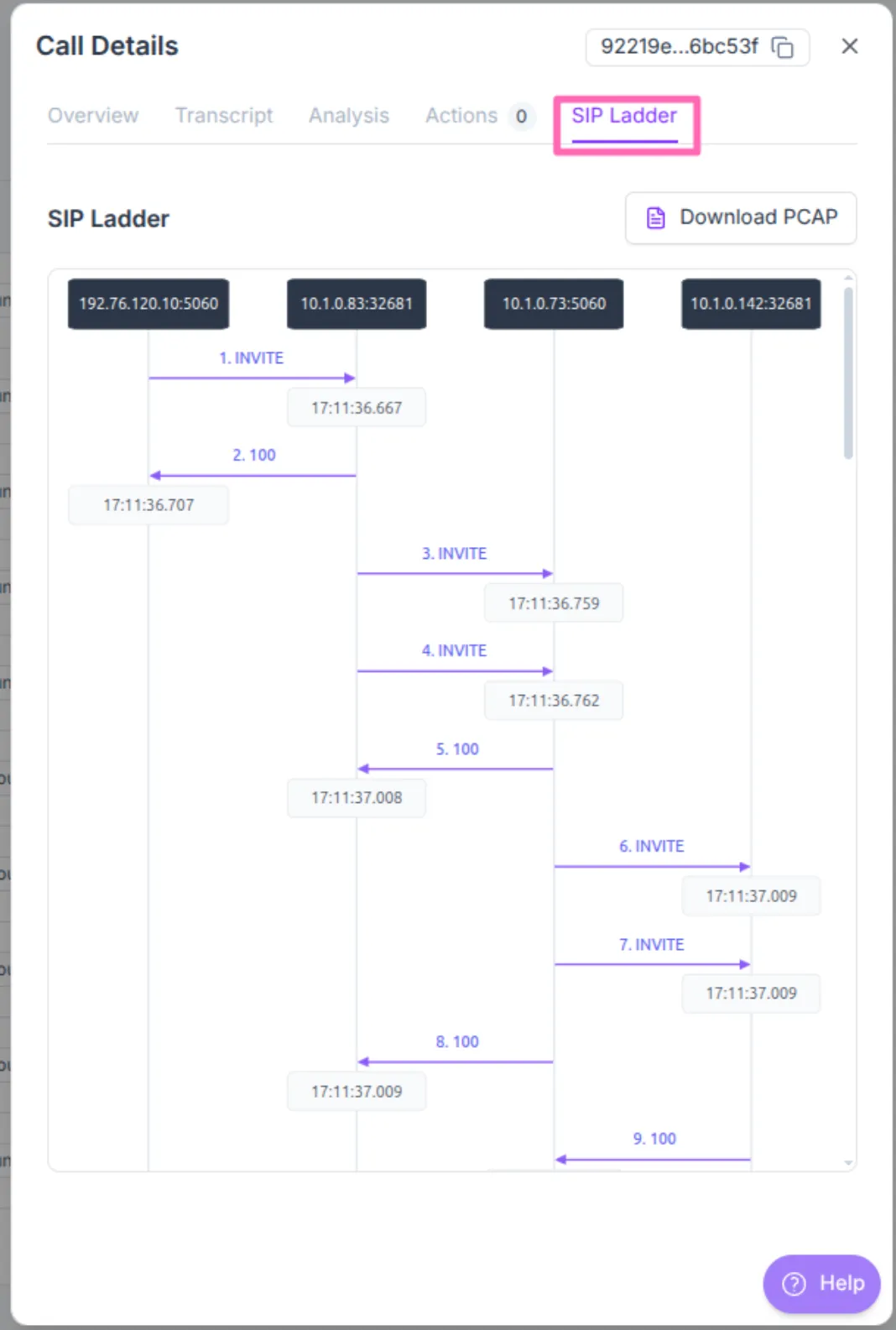
The SIP call ladder shows every SIP message exchanged on a call, in order, with timestamps. Use it to find where a failed call stopped, check the call’s audio quality, follow each warm transfer attempt, and download the packet capture.
To open it, select a call in Logs, then select the Telephony tab.
Ladder diagram
- Vertical lines are the network elements on the call: your agent, Synthflow’s network hops, and the SIP carrier.
- Horizontal arrows are SIP messages between them, such as
INVITE,100 Trying,180 Ringing,200 OK, andBYE. - Timestamps show when each message was sent, so you can see where time was spent.
Common patterns
For the meaning of a specific error code, see Telephony Errors.
Warm transfers
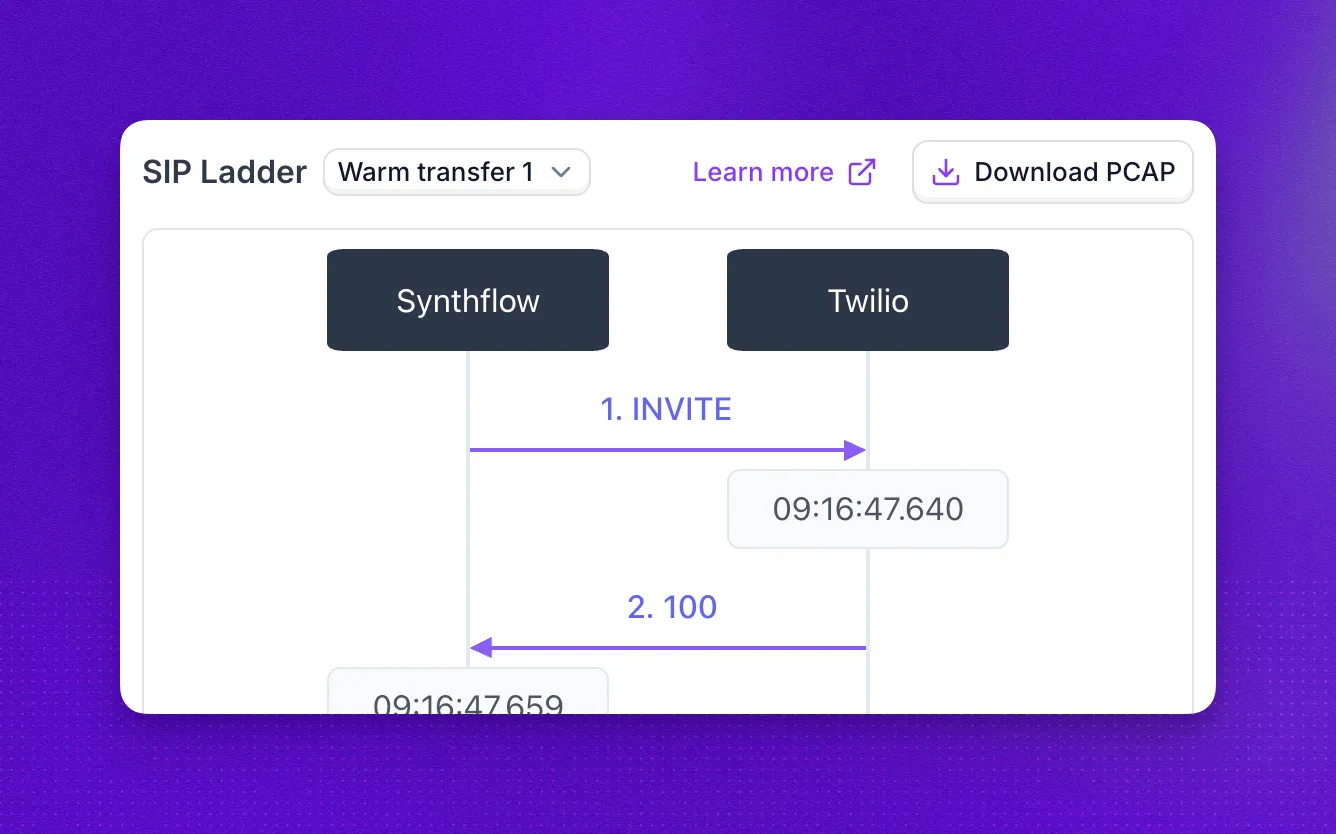
When a call has a warm transfer, the ladder shows each transfer attempt separately. Cold transfers do not appear. Select the attempt from the dropdown next to SIP Ladder to see where a failed transfer stopped.
Match the pattern against the transfer’s failure reason in the call’s Actions tab.
Call quality
The Telephony tab also reports the call’s audio quality, measured from RTCP. Check it first when a caller reports choppy or delayed audio, before you download a PCAP.
A dash means the value is unknown, not zero. It appears when the remote endpoint sends no RTCP, which is common on the carrier leg, or when the audio did not pass through our media relay.
The same measurements are available through the API as telephony_rtp_* fields on Get a call and List calls, reported separately for the WAN (carrier) and LAN (internal) legs. For targets and how to measure on your own network, see Call quality.
PCAP download
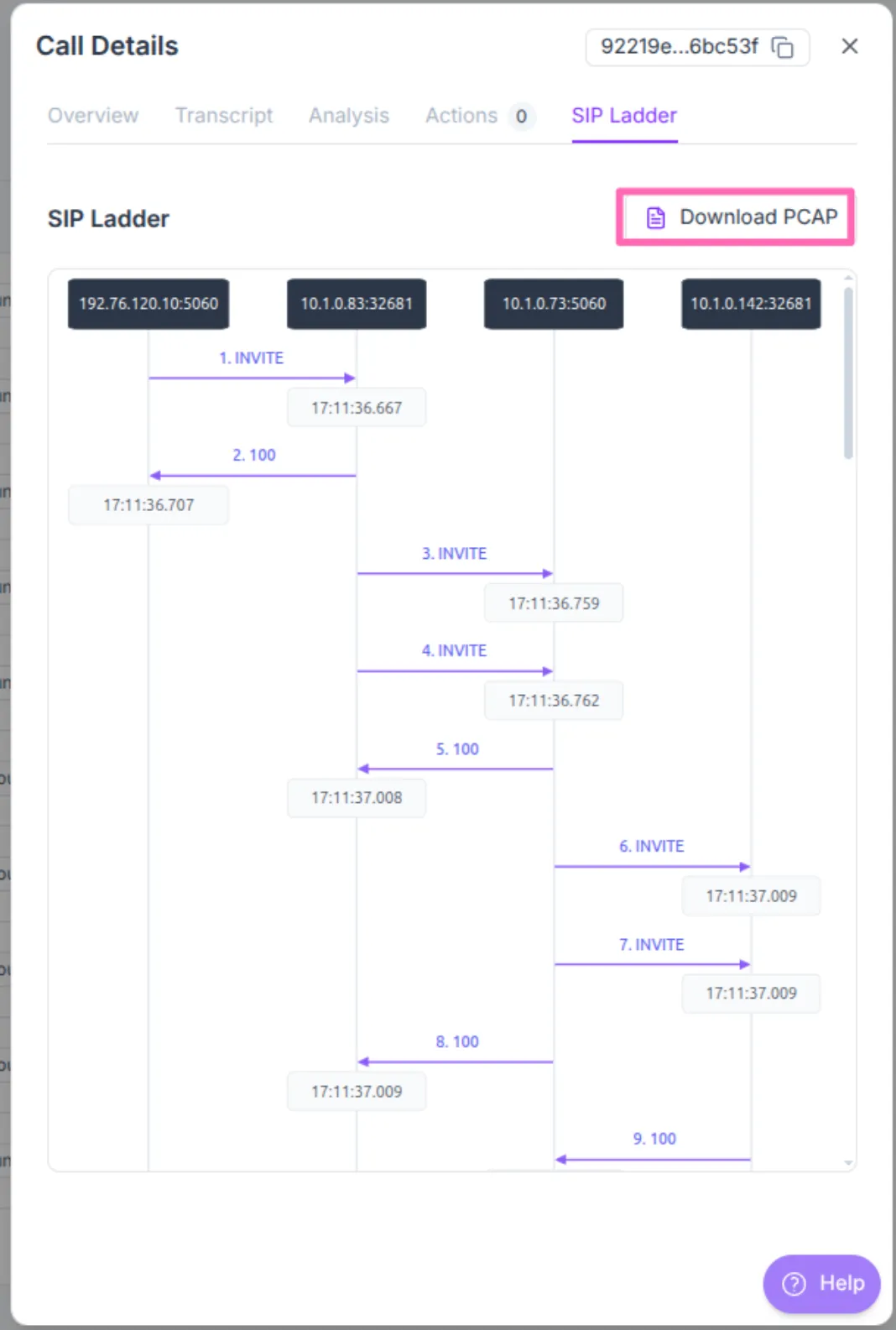
The PCAP file is the full packet capture of the call’s signaling and audio. Select Download PCAP in the Telephony tab, then open the file in a packet analyzer such as Wireshark.
FAQ
What should I send support if I can't find the problem?
Send the PCAP file, a screenshot of the SIP ladder, and the URL of the agent.