

Manual Testing
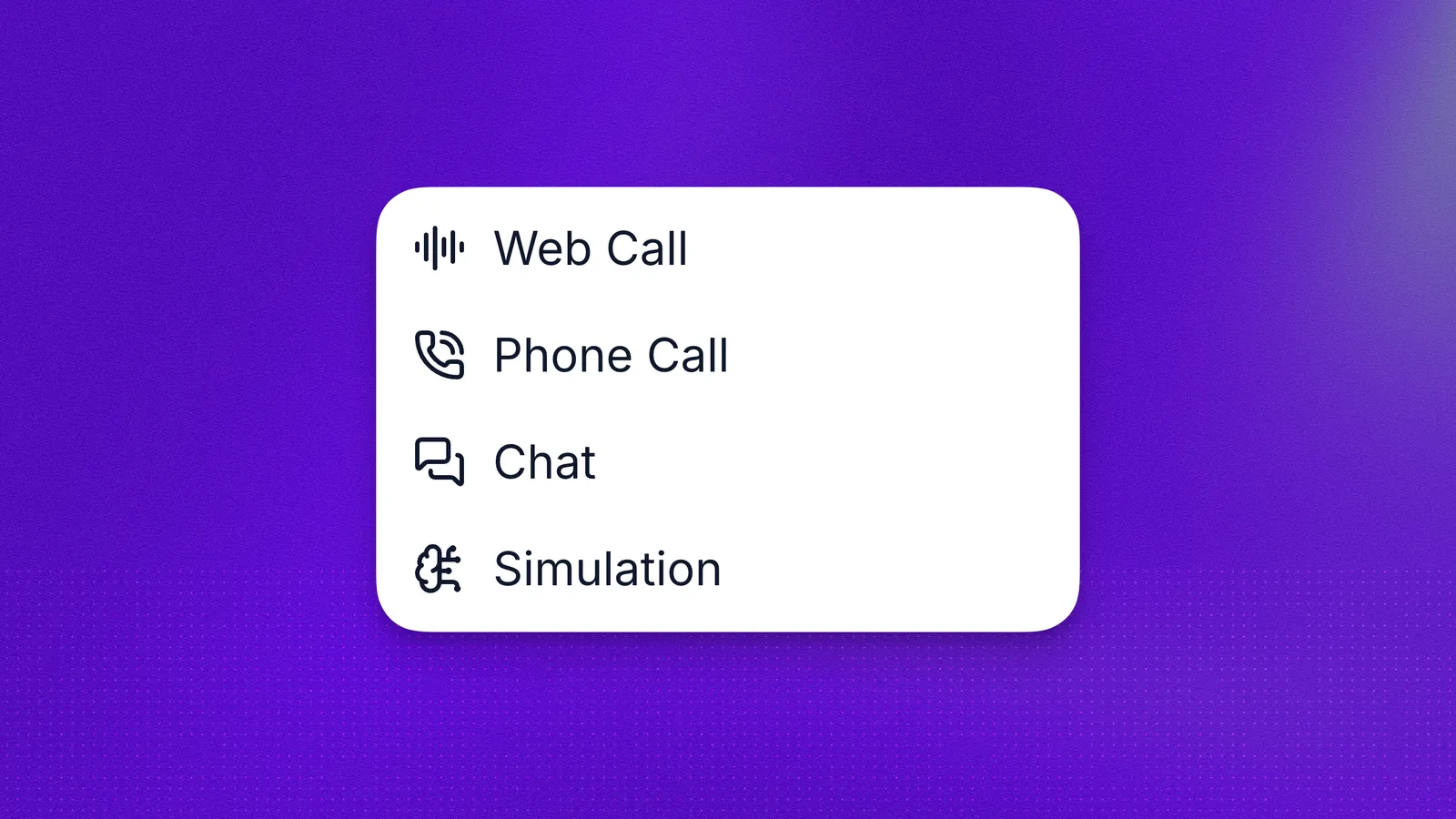
Before you deploy an agent to production, validate how it behaves across real conversations, edge cases, and channel-specific experiences. Synthflow gives you four testing methods that support both quick iteration and repeatable pre-release validation.
Open the agent editor and click Test to choose Phone call, Chat, Web Call, or Simulation. Use manual testing for fast spot checks, then use Simulations to run structured suites before launch.
Choose a testing method
You can access all testing options from the Test menu in the agent editor.
Phone call
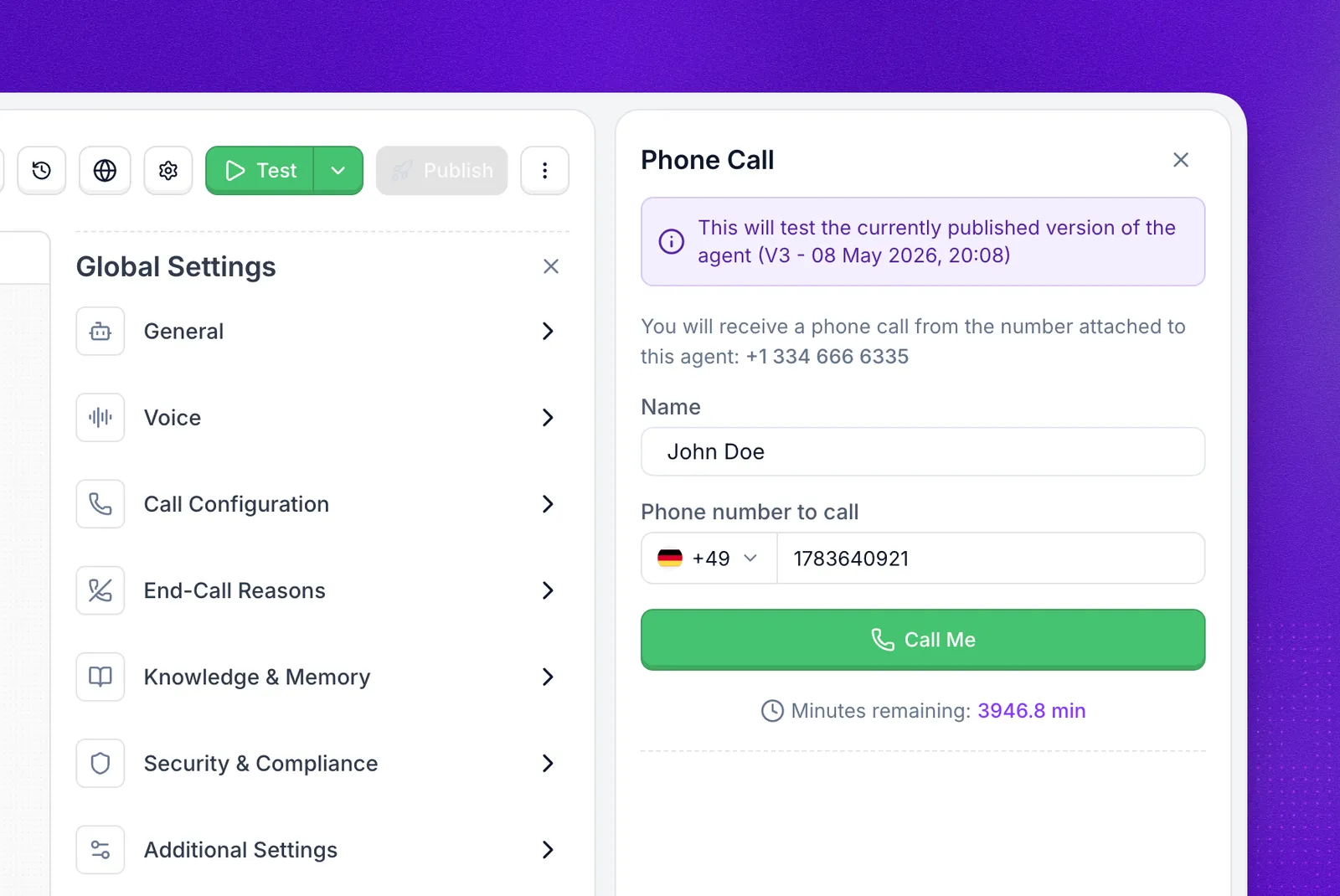
Use Phone call to test with a real call to your number. Click Call Me to hear how your agent sounds in a live interaction and verify pacing, latency, and call quality.
Choose this method when voice quality and conversational realism are your priority.
Chat
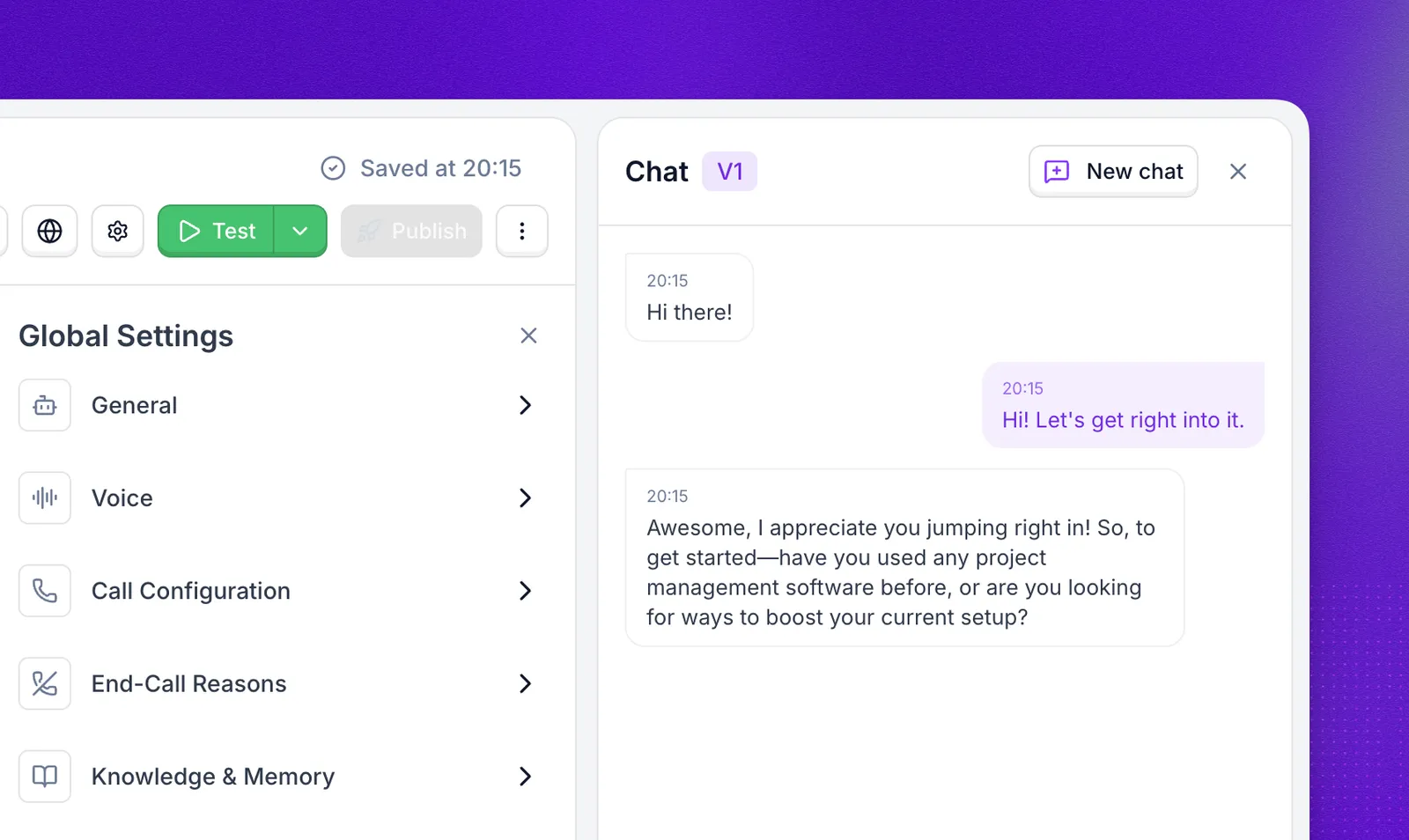
Use Chat to validate conversation logic quickly with text input. The chat panel helps you inspect turn-by-turn responses and iterate on prompts without placing calls.
Choose this method when you want fast debugging loops for prompt behavior.
Web Call
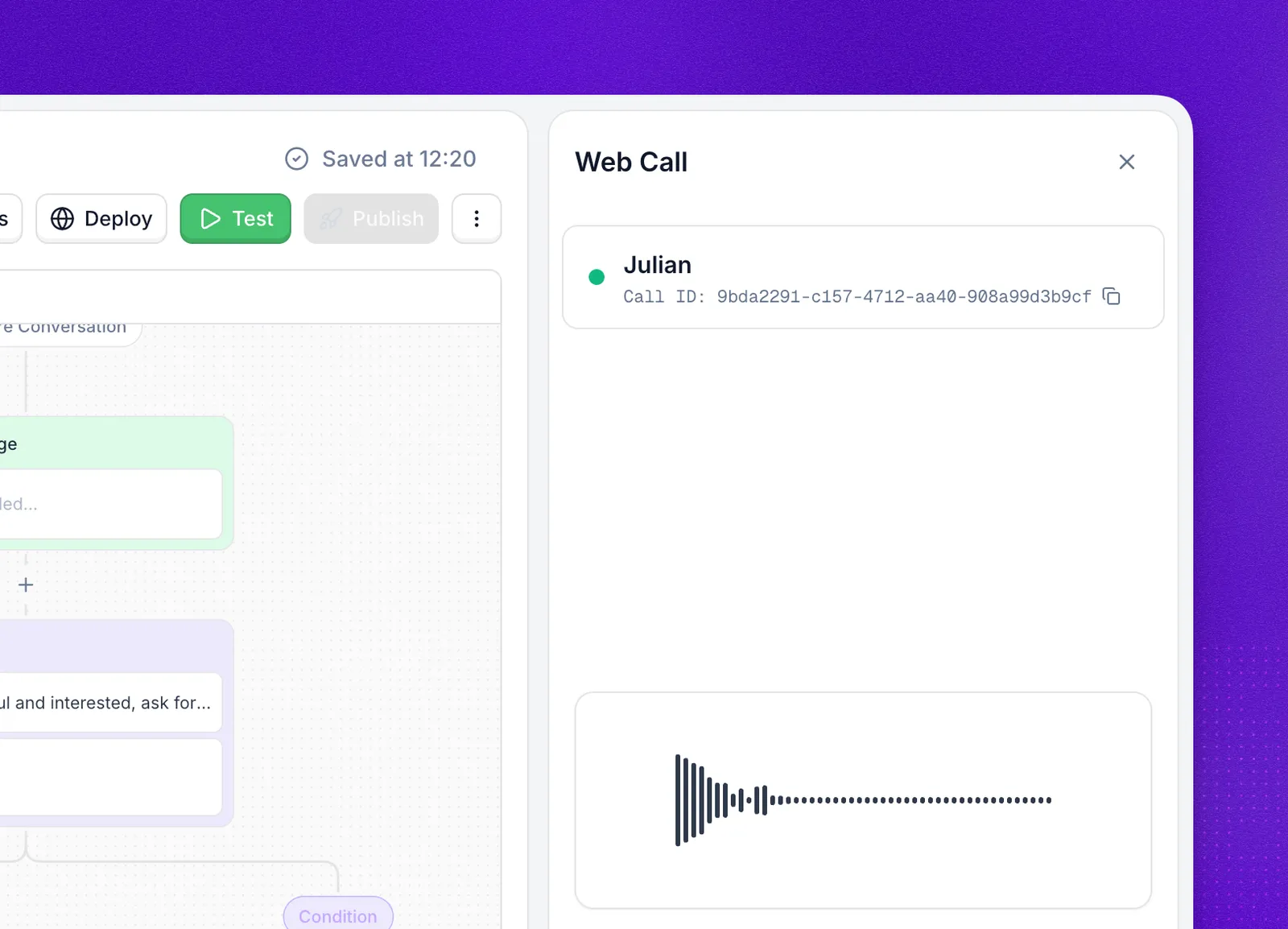
Use Web Call to talk to your agent straight from the browser. It replaces the older Widget test, with the same functionality.
Call transfers are not supported in Web Call. Use a Phone call test to verify transfer behavior.
Choose this method when you want a quick voice check without placing a phone call.
Simulations
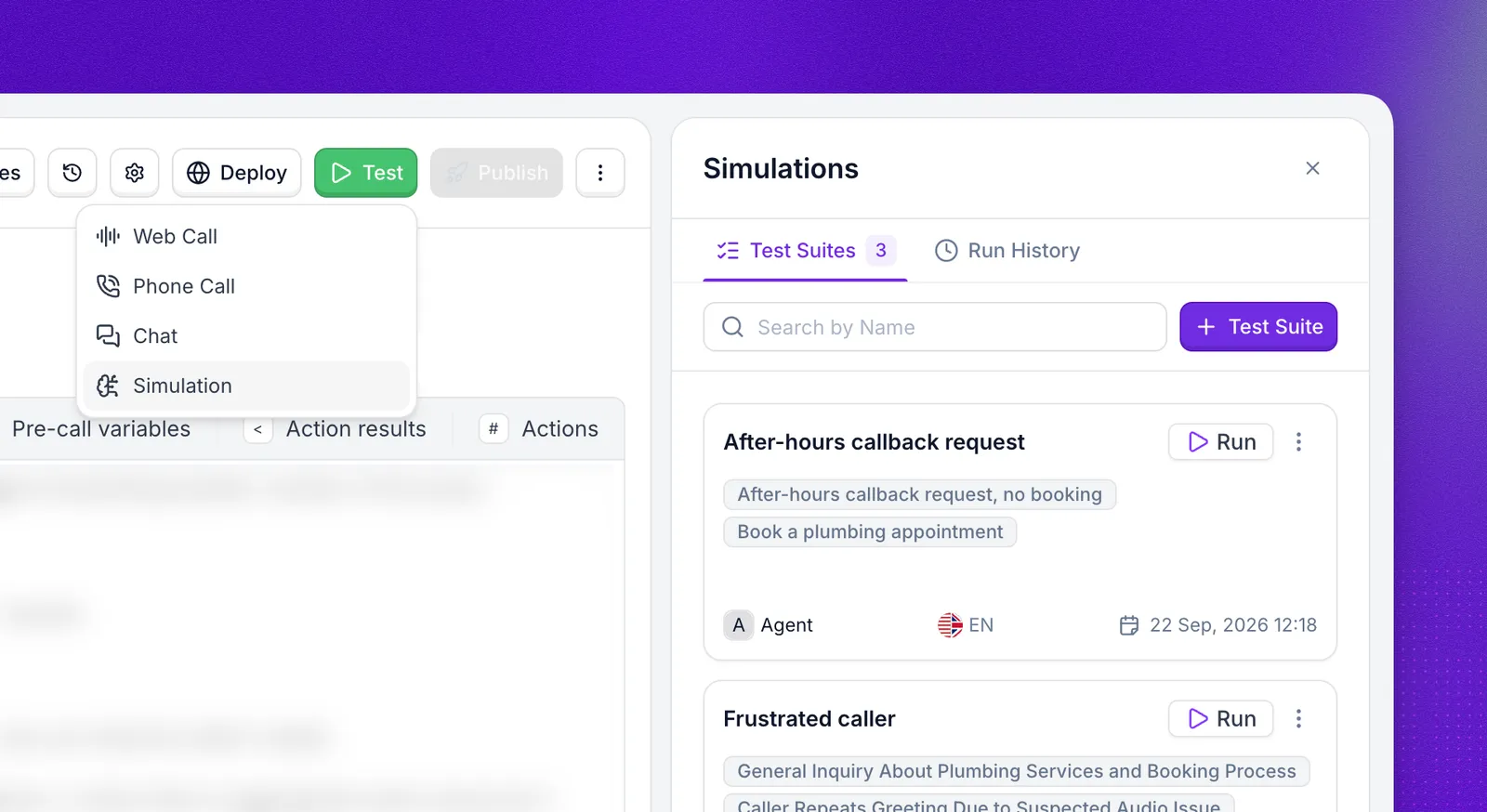
Use Simulation to run automated test suites across many scenarios in parallel. Simulations pair your agent with a persona agent (a simulated customer) and score outcomes against your success criteria. The Simulations panel opens next to the agent, so you can create a test suite, run it, and review the results in Run History without leaving the editor.
Choose this method for systematic validation, regression prevention, and release readiness. For full setup details, see Simulations.
When to use each method
Manual testing (Phone call, Chat, Web Call) is best for fast checks while you build. It lets you inspect one conversation at a time and quickly diagnose specific issues.
Simulations are best for pre-release validation. They let you test many scenarios in parallel with measurable criteria so you can catch regressions before production.
Recommended workflow: Iterate quickly with Chat, confirm voice behavior with Phone call or Web Call, then run a full simulation suite before deployment. Re-run simulations after major prompt or workflow changes.
Why run simulations before release
Manual testing can take hours when you need broad coverage, and edge cases are hard to reproduce consistently. Simulations automate that coverage so validation is faster and more reliable.
With simulations you can:
- Validate agent behavior across multiple scenarios simultaneously
- Test edge cases and failure scenarios that are hard to trigger manually
- Iterate faster when refining prompts, testing changes in minutes instead of hours
- Ensure consistency before client deployments with repeatable test suites
- Track improvements over time by comparing results across test runs
FAQ
Should I use manual testing or simulations first?
Start with manual testing while you build, usually with Chat for speed and Phone call for voice quality. Before release, run simulations to validate broad scenario coverage and catch regressions.
How often should I run simulations?
Run simulations before every production release and after major prompt, tool, or workflow updates. For high-volume agents, schedule regular simulation runs to monitor quality over time.
Can simulations replace manual testing completely?
No. Simulations provide scalable, repeatable coverage, but manual testing is still valuable for listening to real call quality and checking user experience details in chat or web call channels.